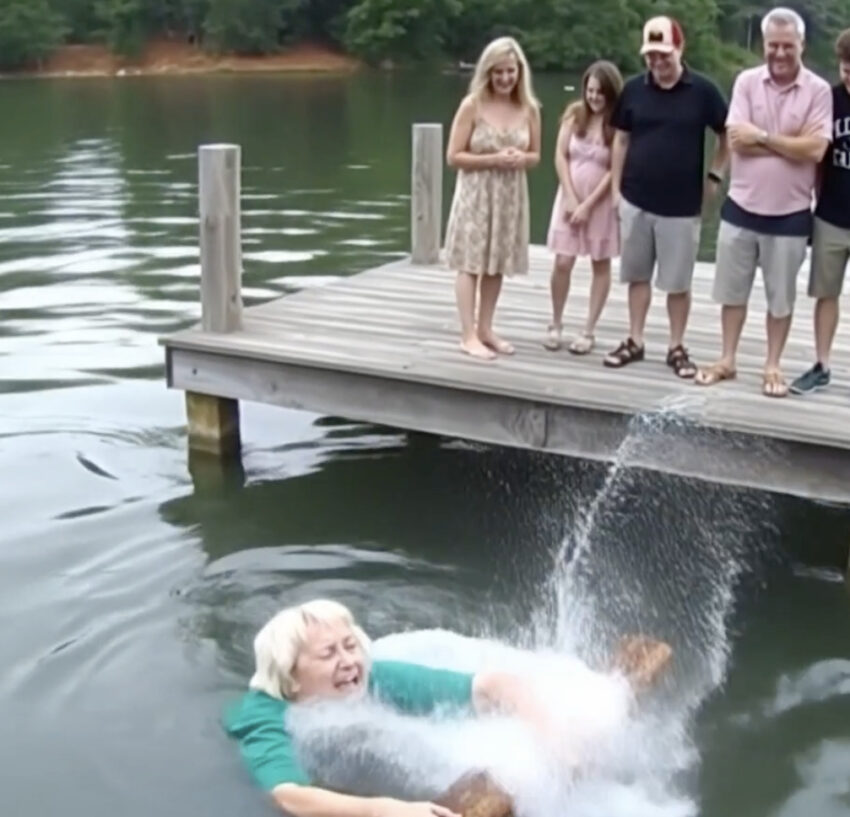
The woman, drenched and shivering, stood up with an unexpected steadiness. Her eyes, which moments ago had reflected sheer terror, now held an unyielding resolve. The laughter subsided, replaced by an uncomfortable silence as her family watched her intently, waiting for her reaction.
With a deep breath, she removed her headscarf, wringing it out with deliberate slowness. Her son, grandsons, and daughter-in-law exchanged quick, uncertain glances as if reconsidering their actions for the first time.
“Mother, are you alright?” her son finally asked, his voice carrying a note of guilt that hadn’t been there before.
She didn’t answer immediately. Instead, she took her time, running her fingers through her soaked hair, a gesture that seemed to strip away the authority they thought they had over her. When she finally spoke, her voice was calm, even serene, and yet there was an underlying strength that made everyone stop and listen.
“I’ve spent most of my life being afraid,” she began, her eyes sweeping over the group, “of water, of what people think, of so many things. You all had a good laugh at my expense, and maybe that’s on me for not facing my fears sooner.”
The family members shifted uncomfortably, the reality of the situation dawning on them. The grandson who had pushed her frowned, the smile long gone from his face.
“But,” she continued, with an unexpected fire in her voice, “what you did today taught me something valuable. Fear is powerful, but it doesn’t have to control me. And you’ve shown me the importance of standing up for myself, of not letting others dictate how I should feel or act.”
Her words hung in the air, each one a quiet accusation that whispered of disappointment and betrayal. The son opened his mouth to speak, perhaps to apologize, but she silenced him with a raised hand.
“I’m not angry,” she said, surprising them all. “I’m grateful. You’ve given me a gift today, one I didn’t expect. I’m going to learn to swim. Not because you pushed me, but because I choose to face what I fear.”
With that, she turned away from them, her steps deliberate and dignified as she made her way off the pier. Her family stood in shock, the implications of her words settling like a heavy weight upon them.
In the days that followed, the woman indeed began taking swimming lessons. With each stroke, she felt more empowered, more liberated from the chains of her past fears. Her family, meanwhile, was left to reflect on their actions and the strength they had underestimated in the woman they thought they knew so well.
Her transformation became a silent testament to resilience, a reminder that sometimes, a push—however cruel—can lead to unexpected growth. They learned, in her quiet defiance, the true meaning of courage and the profound impact of underestimating the strength of someone who has nothing left to lose.