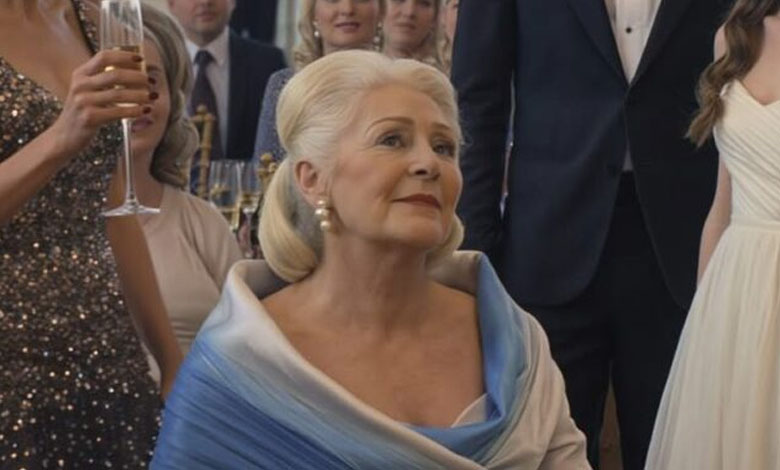
To the beautiful couple.
The crystal champagne flute in my hand caught the light as I raised it in a toast to my grandson, Ethan, and his radiant bride, Rachel. The reception hall at the Four Seasons Palm Beach glowed with candlelight, floral arrangements of white roses and hydrangeas gracing each table. Two hundred thirty-three guests—I checked the final count myself that morning—smiled back at me, a sea of well-wishers gathered to celebrate this union.
At seventy-two, I’d witnessed many family milestones, but none filled me with such uncomplicated joy as seeing Ethan—who had overcome so much in his young life—find happiness with someone who clearly adored him. Their love story had unfolded during his medical residency. Rachel, a dedicated pediatric nurse who shared his passion for healing children, had captured his heart with her compassion and quiet strength.
“May your life together be blessed with the same love and purpose that has marked your journey thus far,” I continued, my voice steady despite the emotion tightening my throat. “Your grandfather would have been so proud of the man you’ve become, Ethan.”
Ethan’s eyes glistened as he nodded in acknowledgement, his arm tightening around Rachel’s waist. My late husband, Walter, had been gone for five years now, but his presence felt especially close today—in Ethan’s tall frame, in the family heirloom cufflinks gleaming at his wrists, in the values so evident in the life he’d built.
I was about to conclude my toast when a familiar voice cut through the moment.
“While we’re giving advice to the newlyweds,” my daughter, Caroline, announced, rising from her seat at the family table, champagne glass held aloft, “I think we should discuss proper wedding gifts. Shouldn’t we, Mother?”
A ripple of uncertain laughter moved through the crowd. Caroline, at fifty-one, was striking in a designer gown that probably cost more than most people’s monthly mortgage payments. She’d always been beautiful—and always aware of it. Four flutes of champagne had heightened the color in her cheeks and loosened whatever filter normally restrained her more impulsive tendencies.
“Caroline,” I said quietly, “perhaps we could discuss this later.”
She ignored me completely, her smile dazzling as she addressed the room. “My son and his lovely bride are starting their life together, and they’ll need a proper home—not some starter apartment in the city.”
My stomach tightened. I knew exactly where this was heading.
“Mother,” Caroline continued, turning toward me with an expression of faux graciousness that did nothing to mask the demand in her eyes, “isn’t it time you gave the Palm Beach house to Ethan and Rachel? What does a widow need with a seven-bedroom beachfront estate, after all?”
The room fell silent. Even the wait staff froze mid-step. At the head table, Ethan’s face drained of color while Rachel stared down at her plate, mortified.
The Palm Beach house had been in our family for three generations. Walter and I had purchased it from his parents, renovated it lovingly, and filled it with forty-five years of memories. It was where we’d hosted our children’s graduation celebrations and our grandchildren’s birthday parties—where Walter had spent his final months gazing at the ocean he’d loved since childhood.
It was also, I knew, the object of Caroline’s obsession for decades. She’d grown up there, but had never been able to afford such a property on her own, despite her husband Richard’s success as an investment banker. The house represented everything she felt entitled to as a Hawthorne.
“Caroline,” I said, keeping my voice gentle but firm, “the Palm Beach house is not a wedding gift. As you know, I have plans for that property that will benefit all three of my grandchildren equally.”
Her laugh was sharp, cutting. “Oh yes—Mother’s mysterious plans. Always planning, always controlling, always making us wait for what should rightfully be ours now.”
Richard tugged at her arm, murmuring something that was clearly a request to sit down. She shook him off.
“Do you know,” Caroline addressed the increasingly uncomfortable guests, “that my mother is worth over thirty million dollars? That she lives in that magnificent beachfront mansion all alone while young couples like Ethan and Rachel struggle to find affordable housing in this market?”
“We’re not struggling, Mom,” Ethan interjected, his voice tight with embarrassment. “Please sit down.”
“Don’t interrupt, darling. I’m doing this for you.” Caroline’s smile took on a brittle edge. “Mother has always been like this—hoarding the family wealth, doling out small allowances like we’re children, making us feel grateful for crumbs from her table.”
The accusation stung with particular sharpness because it was so fundamentally untrue. Walter and I had paid for our children’s education in full, helped with down payments on their first homes, established trusts for our grandchildren’s futures. What we hadn’t done was bankroll the extravagant lifestyle Caroline felt was her birthright.
“Caroline, this is neither the time nor the place,” I began.
“It’s exactly the time.” Her voice rose, the filter of social propriety now completely dissolved by champagne and long-simmering resentment. “You’re just a selfish old woman who can’t bear to part with anything. You’d rather sit alone in that massive house than give your grandson the wedding gift he deserves.”
Gasps rippled through the reception hall. My son David half-rose from his seat across the room, his expression thunderous, but his wife placed a restraining hand on his arm. Even the string quartet had stopped playing, the silence amplifying Caroline’s words as they hung in the air.
I felt two hundred thirty-three pairs of eyes fixed on me, waiting for my response to this public humiliation. My hands trembled slightly, but I clasped them together in my lap, a lifetime of composure under pressure serving me now.
“Your attention, please,” the wedding planner called desperately, trying to salvage the situation. “I believe the cake cutting is scheduled next—”
“Oh, let’s not change the subject,” Caroline overrode her. “Let’s talk about how my mother uses her money to control all of us. How she dangles inheritances to make us dance to her tune. How she—”
“That’s enough.”
Ethan’s voice—usually so gentle—cut through his mother’s tirade with unexpected authority. He stood, his face flushed with a mixture of anger and mortification. “Mom, you’re embarrassing yourself, and you’re ruining our wedding reception.”
Caroline blinked, momentarily shocked by her son’s rebuke. The brief silence gave me the opening I needed.
With deliberate calm, I opened the small beaded evening bag resting on my lap. Inside was an envelope I’d planned to present privately to Ethan and Rachel later that evening, after the festivities concluded, but Caroline’s outburst had forced my hand.
“Perhaps,” I said, my voice clear and steady despite the tension constricting my chest, “it’s time I shared what’s actually in my plans for the Palm Beach house.”
As I withdrew the cream-colored envelope embossed with the family attorney’s return address, the entire reception hall seemed to collectively hold its breath. The envelope felt heavier than its physical weight as I held it before me—the attention of two hundred thirty-three guests pressing like a tangible force.
Caroline’s expression shifted from righteous indignation to wary curiosity, her champagne flute now forgotten in her hand. “Mother,” she said, attempting to reclaim control of the narrative, “this isn’t necessary. We can discuss family matters privately.”
“You chose to make this public, Caroline,” I replied quietly. “Now we’ll finish it publicly.”
Ethan and Rachel exchanged a glance I couldn’t quite interpret—concern, perhaps, or resignation. My grandson had always been perceptive. He likely sensed the seismic shift about to occur in our family dynamic.
I rose from my seat, smoothing the silk of my silver-blue dress, a gesture that gave me a moment to gather my thoughts. At seventy-two, I’d learned that true power often resided in calm deliberation rather than reactive emotion.
“For those who don’t know me well,” I began, addressing the room full of guests, “I’m Margaret Hawthorne, Ethan’s grandmother. My late husband, Walter, and I were blessed with financial success beyond anything we could have imagined when we started our technology company in the 1970s.”
The tension in the room remained palpable, but a different quality had entered it now—curiosity replacing the earlier discomfort.
“The Palm Beach house my daughter mentioned has been in our family for three generations. It’s where Walter spent his final days, where Ethan recuperated during his illness as a child, where our family has gathered for every important celebration for decades.”
I opened the envelope with steady fingers, removing several sheets of legal documentation.
“Six months ago, I finalized arrangements to establish the Walter Hawthorne Foundation, dedicated to providing restorative retreats for children recovering from cancer treatment and their families.”
A murmur rippled through the crowd. From the corner of my eye, I saw Caroline’s posture stiffen.
“The Palm Beach house,” I continued, “will serve as the foundation’s primary retreat facility, offering families the same healing environment that benefited our own family during Ethan’s battle with leukemia at age twelve.”
I turned directly to Ethan and Rachel, whose expressions had transformed from embarrassment to something deeper.
“Ethan, you and Rachel were the first to know about this plan—which is why your request for donations to childhood cancer research in lieu of wedding gifts was so perfectly aligned with what your grandfather would have wanted.”
Caroline’s face drained of color as the implications sank in. Not only was I not giving the Palm Beach house to Ethan as she demanded, but Ethan had already known about—and apparently approved—my plans for the property.
“You knew?” she asked him, her voice barely audible over the hushed murmurs of the guests. “You knew she was giving away our family home?”
Ethan straightened in his chair, his arm still around Rachel’s shoulders. “It’s not being given away, Mom. It’s being given purpose. Rachel and I will be serving on the foundation’s board. We’ve already been working with Grandma’s team on the renovation plans.”
The betrayal Caroline clearly felt was written across her features, her carefully maintained composure crumbling. “But it’s our family legacy—your inheritance.”
“The house was never meant to be anyone’s personal inheritance,” I interjected gently. “Walter and I always intended it to serve a greater purpose. The foundation was his idea originally—something we discussed during his final months.”
I returned my attention to the wider audience, many of whom were watching with expressions ranging from fascination to discomfort at being unwilling witnesses to our family drama.
“For those concerned about Ethan and Rachel’s future,” I continued, “please know that Walter and I established trust funds for each of our grandchildren years ago. Ethan and Rachel will receive their portion as planned, which should provide a comfortable start to their married life.”
Caroline made a small dismissive sound. “Trust funds they can’t access until they’re thirty-five. More control—more strings attached.”
“Actually,” Rachel spoke for the first time, her normally soft voice carrying surprising authority, “we’ve already received an advance from our trust specifically for a down payment on a home. Ethan and I found a lovely place near the hospital where we both work. We close on it next month.”
That revelation seemed to stagger Caroline more than anything preceding it. She sank back into her chair, the fight visibly draining from her posture.
David, my son and Caroline’s younger brother, chose that moment to rise from his table across the room. At forty-eight, he had Walter’s steady presence and pragmatic nature.
“I think,” he said, his voice pitched to Carrie without seeming confrontational, “that it’s time we returned our focus to celebrating Ethan and Rachel’s marriage. The string quartet has that piece you requested ready, Ethan.”
The wedding planners seized the opportunity, gesturing frantically to the musicians, who immediately began playing the gentle melody Ethan had selected for the cake cutting. The familiar ritual provided a welcome structure for guests to redirect their attention, though I noticed many conversations had dropped to whispers, undoubtedly dissecting the family drama they’d just witnessed.
As I returned to my seat, I caught Ethan’s eye across the room. He gave me a small nod—part gratitude, part apology for his mother’s behavior. Rachel leaned close to whisper something in his ear, and his expression softened into a smile.
Caroline remained seated, her posture rigid, eyes fixed on some middle distance as Richard attempted to engage her in quiet conversation. The flush of champagne and anger had been replaced by a bloodless pallor that concerned me despite everything that had transpired. She was still my daughter. Her materialistic values and occasional cruelty didn’t negate the little girl I’d once rocked to sleep, the teenager whose dance recital I’d never missed, the young woman I’d helped dress on her own wedding day.
The public humiliation she’d just experienced—largely self-inflicted, though it was—would leave scars that might never fully heal.
As the reception gradually regained its celebratory rhythm, I felt a profound weariness settle over me. The envelope I’d produced had indeed silenced the room, but at what cost to our already fragile family bonds? Only time would tell if this fracture could be mended, or if Caroline’s resentment and my response had permanently altered the landscape of our relationship.
For now, I pushed those concerns aside. Today belonged to Ethan and Rachel. Tomorrow would be soon enough to face the aftermath.
The remainder of the reception unfolded with a forced gaiety that couldn’t quite disguise the undercurrent of tension. Guests laughed a bit too loudly, danced with exaggerated enthusiasm, and studiously avoided glancing toward the family table where Caroline sat in stony silence.
By the time Ethan and Rachel departed in a shower of rose petals and well-wishes, Caroline and Richard had already slipped away, their absence from the final receiving line conspicuous—but perhaps merciful, given the circumstances.
“Well, that was quite the wedding,” David remarked dryly as he helped me into the waiting car that would return me to my hotel suite. His wife, Jennifer, had gone ahead with their teenage daughter, leaving us a rare moment alone.
“Not exactly how I envisioned the evening unfolding,” I admitted, settling against the leather seat with a sigh of exhaustion.
“I never intended to announce the foundation so publicly,” I added. “Caroline didn’t leave you much choice.”
David’s tone held no judgment, just weary acceptance of his sister’s behavior. “Though I imagine this will be the main topic of conversation at the country club for months.”
The observation wasn’t meant to wound, but I felt a pang nonetheless. Public spectacle had never been the Hawthorne way. Walter and I had built our fortune quietly, conducted our philanthropy discreetly, and taught our children to value substance over show. That one of those children had chosen to air family grievances before hundreds of witnesses felt like a personal failure on my part.
“Do you think I handled it correctly?” I asked, suddenly needing my son’s perspective. “Was there a better way to respond?”
David considered the question with characteristic thoroughness. “Caroline put you in an impossible position. Giving in to her demand would have rewarded appalling behavior. Refusing without explanation would have cast you as the villain in her narrative. You chose transparency, which was probably the only viable option.”
His assessment was logical, but it did little to ease the heaviness in my heart.
“I should check on her tomorrow,” I said. “Whatever her flaws, she’s still my daughter.”
“Give her a day or two,” David advised, his expression softening. “You know how Caroline retreats when she’s embarrassed. She’ll need time to process what happened.”
I knew he was right. Caroline’s pattern since childhood had been to lash out when hurt, then withdraw to nurse her wounds in private. Approaching her too soon would only deepen her humiliation and resentment.
“What about Ethan and Rachel?” I asked. “Their wedding reception turned into a family soap opera. They must be devastated.”
“Actually,” David’s mouth quirked into a small smile, “Rachel told Jennifer they’re considering it memorable rather than ruined. Apparently, Ethan said, ‘Every wedding needs one dramatic story for the grandchildren, and Caroline certainly provided theirs.’”
The thought of Ethan finding humor in the situation lifted my spirit slightly. His resilience had always amazed me—perhaps a quality forged during his battle with leukemia as a child, when he’d faced each painful treatment with a courage that humbled the adults around him.
“They’re leaving for their honeymoon tomorrow,” I confirmed, mentally reviewing the schedule that had once been so clear in my mind before the evening’s drama had scattered my thoughts. “Two weeks in Italy. Rachel’s never been to Europe.”
David checked his watch. “They should be at the airport hotel by now, with an early flight tomorrow.”
When we reached my hotel, David insisted on escorting me to my suite despite my protests that I was perfectly capable of finding my way. His protective instinct—so like his father’s—warmed me even as I maintained I didn’t need the assistance.
“I’m seventy-two, not ninety-two,” I reminded him as we rode the elevator. “Fully ambulatory and of sound mind, despite what your sister might imply.”
“Humor me,” he replied with the same gentle stubbornness that had characterized Walter. “It’s been a long evening for everyone—especially you.”
In my suite, I found a text message from Ethan: safe at airport hotel. Don’t worry about tonight. We love you. Thank you for everything.
The simple message brought unexpected tears to my eyes. I typed back quickly: Love you both. Safe travels. We’ll talk when you return.
After David departed with a reassuring hug and a promise to call tomorrow, I found myself alone with the lingering emotions of the evening. I moved to the window, gazing out at the Palm Beach coastline gleaming under moonlight.
Somewhere in that silvery landscape sat the house that had become such a focal point of tonight’s conflict. The Walter Hawthorne Foundation had been in development for over a year, with Ethan and Rachel intimately involved in the planning process from the beginning. Caroline’s accusation that I was giving away the family legacy revealed how fundamentally she misunderstood my intentions—and her son’s values.
The Palm Beach house wasn’t being lost to the family. It was being transformed into the fulfillment of Walter’s final wish.
During those last months, as cancer gradually claimed him, we’d spent hours on the oceanfront terrace discussing how our blessings might become blessings for others.
“Remember when Ethan was sick?” he’d said one evening as the sun sank toward the horizon. “How this place became his sanctuary between treatments? How the sound of the waves seemed to ease his pain when nothing else could?”
I did remember those terrible months when our twelve-year-old grandson fought for his life—his small body ravaged by chemotherapy, his spirit somehow remaining unbroken. We’d converted the ground-floor guest suite into a comfortable room for him, positioned his bed to face the ocean, and watched as the natural beauty outside his window seemed to nourish something essential within him.
“Other children should have this,” Walter had continued, his once powerful voice by then reduced to a whisper. “Other families need a place to heal together—away from hospital lights and disinfectant smells.”
The idea had taken root, growing stronger even as Walter weakened. By the time he died, the foundation existed as a concept, a promise I’d made to him that I fully intended to fulfill.
Caroline had never known about those conversations. She’d visited dutifully during Walter’s illness, but always briefly—always visibly uncomfortable with the physical realities of his decline. She hadn’t been present for those sunset talks, those whispered dreams of a legacy beyond material wealth.
Perhaps that explained, at least partially, her inability to understand why the house wouldn’t simply be passed down as a private residence. She’d missed the context, the emotional genesis of the foundation concept.
As I prepared for bed, my phone chimed with another message. This one from David: Just checked on Caroline. She’s home safely. Angry and embarrassed, but physically fine. Get some rest, Mom. Tomorrow is another day.
His reassurance eased one immediate concern, though the larger fracture in our family remained. Caroline’s public outburst had exposed tensions that had simmered beneath the surface for years—her materialism versus our more restrained approach to wealth, her sense of entitlement versus our emphasis on stewardship.
Tonight had brought these differences into sharp, painful focus. What remained to be seen was whether understanding and reconciliation could emerge from the wreckage of Caroline’s expectations.
As I drifted toward sleep, Walter’s voice seemed to whisper from memory. Family is complicated, Maggie. Love them anyway.
I would try, I promised him silently. I would try.
Morning arrived with the particular clarity that follows emotional storms—a heightened awareness of ordinary details that had previously gone unnoticed. The precise pattern of sunlight filtering through curtains. The subtle scent of fresh coffee delivered by room service. The distant sound of waves breaking against the shore.
I sat on the balcony of my hotel suite, watching Palm Beach awaken below. Sunday brunch crowds began to form outside popular restaurants. Joggers traced paths along the shoreline. A world continuing its normal rhythms, utterly unaffected by the Hawthorne family drama that had unfolded the previous evening.
My phone had remained silent since David’s text the night before. No message from Caroline, which was expected but painful nonetheless. No updates from Richard, who had always served as family diplomat during previous conflicts. The absence of communication spoke volumes about the severity of the rupture.
A knock at my door announced Jennifer, David’s wife, arriving as planned to accompany me to the post-wedding brunch being hosted by Rachel’s parents. Originally, Caroline and Richard had been slated to attend as well, but their appearance now seemed unlikely.
“Good morning, Margaret,” Jennifer greeted me with a warm hug. At fifty-two, she carried herself with the natural grace that came from her years as a professional dancer before transitioning to teaching. “How are you holding up?”
“Managing,” I replied honestly, though dreading facing everyone after last night’s spectacle.
Jennifer’s expression was sympathetic but firm. “You have nothing to be embarrassed about. Caroline created the situation—not you.”
“Perhaps,” I acknowledged, gathering my handbag, “but I’m still the mother who failed to instill better values in her daughter.”
“That’s not fair to yourself,” Jennifer countered as we headed toward the elevator. “Caroline has made her own choices as an adult. David turned out wonderfully with the same upbringing.”
The observation was meant to comfort, but it only underscored the question that had haunted me for decades. Where had I gone wrong with Caroline? How had the same parental guidance that produced David’s grounded perspective resulted in his sister’s materialistic entitlement?
The brunch venue—an elegant restaurant overlooking the Intracoastal Waterway—had been decorated with the same white and blue hydrangeas from the wedding. Rachel’s parents, Robert and Susan Mitchell, greeted guests with the relaxed warmth of people relieved that their hosting duties were nearly complete.
“Margaret,” Susan embraced me with genuine affection. We’d developed a comfortable relationship during the wedding planning process, bonding over shared values and mutual adoration of Ethan and Rachel. “We missed you at the rehearsal dinner. How are you feeling?”
The question was loaded with subtext. Susan had witnessed Caroline’s behavior at the reception along with everyone else. Her inquiry encompassed both genuine concern and diplomatic acknowledgement of the situation.
“Much better. Thank you,” I replied, matching her tactful approach. “A minor migraine kept me from the rehearsal dinner.”
A blessing in disguise, given what had transpired at the reception.
“The wedding was beautiful,” I added. “You and Robert did a marvelous job with everything.”
Susan squeezed my hand. “We’re so happy to have Ethan joining our family. He’s an exceptional young man. You and Walter raised a wonderful grandson.”
The simple validation brought unexpected emotion to my throat. “Thank you. Rachel is equally special. They complement each other beautifully.”
As Jennifer and I found our assigned table, I was grateful to discover David already seated along with the parents of Rachel’s college roommate. The arrangement provided a buffer of unfamiliar faces—people who might have witnessed last night’s drama, but had no personal investment in the Hawthorne family dynamics.
David leaned close as I settled beside him. “Caroline and Richard send their regrets. Apparently, they had a previously scheduled commitment they couldn’t break.”
The transparent excuse was almost certainly fabricated, but I nodded as if accepting its legitimacy. “Understandable.”
“Have you heard from Ethan and Rachel?” I asked.
“Their flight departed on schedule. They’ll text when they land in Rome.” David hesitated before adding, “Ethan called this morning before heading to the airport. He wanted to make sure you were okay.”
The thought of my grandson worrying about me on what should have been the carefree beginning of his honeymoon created a fresh pang of regret. “What did you tell him?”
“That you’re made of stronger stuff than Caroline gives you credit for,” David replied with a small smile, “and that he should focus on enjoying Italy with his new wife.”
The brunch progressed pleasantly, with toasts considerably more subdued than those at the reception. Rachel’s father spoke briefly about the joy of gaining Ethan as a son-in-law. Her younger sister shared sweet anecdotes from their childhood. The event maintained the warm, intimate atmosphere that wedding farewells traditionally hold.
Only Caroline and Richard’s conspicuously empty seats served as reminders of the previous evening’s disruption. Several guests glanced discreetly in my direction, their expressions a mixture of curiosity and sympathy that I pretended not to notice.
“They’ll find something new to gossip about soon enough,” Jennifer murmured as we enjoyed slices of the remaining wedding cake repurposed as brunch dessert. “Palm Beach social circles have the attention span of goldfish when it comes to scandals.”
Her attempt at reassurance missed the mark slightly. My concern wasn’t about social standing or public perception. Those had never been priorities for Walter and me. What weighed on me was the damage to our family itself—the wedge that had been driven deeper between Caroline and the rest of us.
After brunch concluded, David insisted on driving me to the Palm Beach house rather than returning me to the hotel.
“You should spend your last day here surrounded by good memories, not hotel furnishings,” he argued.
I didn’t have the energy to refuse. The house—the very property at the center of last night’s conflict—offered familiar comfort that suddenly seemed essential.
As David’s car wound along the oceanfront road, I gazed at the passing mansions with their manicured lawns and security gates. Palm Beach had changed dramatically since Walter and I had purchased our home here forty years ago. What had once been merely affluent had transformed into an enclave of almost unimaginable wealth—hedge fund managers and tech billionaires replacing the old-money families who had previously dominated the island.
Our house, while certainly luxurious by normal standards, was actually modest compared to many of its newer neighbors. Its value lay in its prime beachfront location and the three acres of land it occupied—an increasingly rare commodity as larger properties were subdivided for development.
Caroline had always focused on the home’s monetary value rather than its emotional significance. In her view, the fact that it could sell for upwards of twenty million outweighed any sentimental attachments or philanthropic potential.
“Are you sure you’ll be comfortable here alone?” David asked as we turned into the private drive. “Jennifer and I could stay over if you’d prefer company.”
“I’ll be fine,” I assured him. “The foundation team is coming tomorrow to continue measuring for the renovations. I have plenty to keep me occupied until my flight home on Tuesday.”
The house welcomed me with the particular embrace that only longtime homes can offer—the familiar creak of the front door, the quality of light in the entryway, the subtle scent of lemon oil used on the wooden banisters for decades.
After David departed with a promise to call that evening, I moved through the rooms slowly, touching furniture and photographs, reacquainting myself with the space that would soon undergo its transformation from private residence to healing retreat.
In Ethan’s former sick room—now a cheerful guest suite with no visible traces of those difficult months—I paused at the window overlooking the Atlantic. The same view that had comforted my grandson during his darkest days would soon provide solace to other children fighting their own battles against cancer.
The rightness of this evolution settled over me like a comfortable shawl. This was what the house had been building toward all along—its ultimate purpose revealing itself at exactly the right moment.
Caroline couldn’t see it yet. Perhaps she never would. But Ethan understood, and that knowledge brought its own measure of peace.
Tomorrow would bring foundation representatives, architectural discussions, and practical matters. Tonight, I would simply be present with memories—both painful and precious—that these walls contained.
“We’re doing the right thing, Walter,” I whispered to the empty room. “Aren’t we?”
Only the rhythmic sound of waves answered, but somehow it was enough.
Three days later, I was back in my primary residence in Boston—a comfortable but unpretentious townhouse in Beacon Hill that had been home since Walter and I downsized twelve years earlier. The emotional whiplash of the wedding weekend had left me craving the familiar routines that anchored my daily life: morning coffee in the small garden courtyard, correspondence handled at my antique writing desk, afternoon walks through the Public Garden.
“Mrs. Hawthorne, there’s a delivery for you,” announced Mrs. Sullivan, the housekeeper who had been with me since Walter’s illness. She appeared in the doorway of my study, where I’d been reviewing foundation documents.
The arrangement that arrived was unmistakably from Caroline: enormous white hydrangeas identical to those from the wedding, artfully combined with blue delphiniums in a crystal vase I recognized from her dining room. The card attached bore her distinctive handwriting, the pressure of her pen leaving slight indentations in the thick paper.
Mother, I behaved abominably at Ethan’s wedding. There is no excuse for my actions, though champagne and misunderstanding contributed to my poor judgment. May we speak when you feel ready. Caroline.
No explicit apology, I noted—just an acknowledgement of behavior and a tentative request for conversation from Caroline. Still, it represented significant humility. Her usual approach to conflict involved either righteous defensiveness or icy withdrawal until the other party made amends.
I studied the arrangement thoughtfully. The flowers were beautiful but impersonal, the kind she might send to a business associate after a minor faux pas, not a daughter’s peace offering after publicly humiliating her mother. Still, they represented a first step—however tentative.
“Would you like me to find a place for these, Mrs. Hawthorne?” Mrs. Sullivan asked, her carefully neutral tone suggesting she had her own opinions about Caroline’s behavior but was too professional to express them.
“The dining room table, please,” I decided. “They’ll brighten the space nicely.”
After she departed with the arrangement, I considered my response. Should I call Caroline immediately? Wait a day to indicate I wasn’t overly eager? The calculations felt exhausting and slightly ridiculous at my age. Seventy-two years on this earth should have elevated me beyond such adolescent chess moves.
I reached for my phone and dialed Caroline’s number directly.
“Mother.” Her voice held surprise and a hint of weariness. “I didn’t expect to hear from you so soon.”
“The flowers are lovely,” I said simply. “Thank you.”
An awkward silence followed, stretching just long enough to become uncomfortable before Caroline spoke again.
“I thought perhaps we could have lunch—or tea, if you prefer—to discuss things.”
“Lunch would be nice,” I agreed. “Are you free tomorrow?”
We arranged to meet at a small French bistro equidistant from our homes—neutral territory that wouldn’t give either of us the psychological advantage of home turf.
After ending the call, I sat quietly for several minutes, contemplating what might actually be accomplished through this meeting.
Caroline’s behavior at the wedding hadn’t emerged from nowhere. It represented decades of simmering resentment regarding money, perceived favoritism, and divergent values. One lunch wouldn’t resolve such deeply rooted issues, but perhaps it could begin a more honest dialogue than we’d managed in years.
That evening, a text arrived from Ethan: a photo of him and Rachel in front of the Trevi Fountain, their faces glowing with happiness.
Greetings from Rome. The hotel concierge somehow found us a table at that impossible-to-book restaurant Rachel’s been dreaming about. Having the time of our lives.
I smiled at their evident joy, relieved that the wedding drama seemed far from their thoughts. In response, I sent only: You both look radiantly happy. Enjoy every moment.
No mention of Caroline, no updates about family tension. Their honeymoon deserved to remain unshadowed by concerns they could do nothing about from thousands of miles away.
The following day, I arrived at the bistro ten minutes early—a habit Walter had instilled through forty-seven years of marriage.
“Punctuality is respect made visible,” he’d often said, particularly when the children complained about his insistence on leaving for events with time to spare.
Caroline predictably arrived five minutes late—not enough to be considered rude, but sufficient to establish she had a busy, important life with competing demands on her time. She looked polished as always in a designer suit that likely cost more than most people’s monthly salary. Her blonde hair was expertly styled to disguise the gray she refused to acknowledge.
“Mother,” she greeted me with air kisses near each cheek—the social performance she’d adopted in her twenties and never abandoned, even with family. “You look well. Boston agrees with you.”
“Thank you,” I replied, accepting the compliment at face value rather than searching for hidden barbs. “You’re looking well yourself.”
A waiter appeared to take our drink orders. Sparkling water for me. White wine for Caroline.
The ritual of studying menus and placing orders provided a convenient distraction from the conversation we were both ostensibly here to have.
Only after our appetizers arrived did Caroline finally address the elephant in the room.
“I want to apologize for my behavior at the wedding,” she said, her voice carefully modulated. “It was inappropriate and embarrassing for everyone—especially Ethan and Rachel.”
The words sounded rehearsed but not insincere. Perhaps practiced in front of a mirror to ensure the right balance of contrition without excessive vulnerability.
“Apology accepted,” I said simply. “Though I think Ethan and Rachel might appreciate hearing it directly as well.”
Caroline nodded stiffly. “I’ve sent them a message—and a rather extravagant addition to their honeymoon. A private yacht excursion along the Amalfi Coast when they reach that portion of their trip.”
Typical Caroline, attempting to purchase forgiveness rather than have a difficult conversation. Still, it represented effort, which was more than I had honestly expected.
“That’s generous,” I acknowledged. “I’m sure they’ll enjoy the experience.”
Another silence descended as we attended to our food. I waited, giving Caroline space to direct the conversation toward whatever she truly wanted to discuss.
Eventually, she set down her fork and met my gaze directly. “Why didn’t you tell me about the foundation plans?”
Her tone was more genuinely curious than accusatory. “Finding out that way—in front of everyone—with Ethan already knowing, it felt like a deliberate exclusion.”
The question deserved an honest answer.
“Initially, because the foundation was still taking shape legally and logistically,” I said. “Later, because I anticipated exactly the reaction you had—disappointment and anger that the house wouldn’t become private family property.”
“You could have prepared me,” she countered. “Given me time to adjust to the idea before the public announcement.”
“Perhaps,” I conceded, “though I hadn’t planned to announce it at the wedding at all. That was a response to your public demand.”
Caroline had the grace to look momentarily abashed. “The champagne was a factor. And I genuinely believed you were being unnecessarily withholding about the house—that you were using it as a control mechanism.”
The accusation, even stated more calmly now, still stung.
“Caroline,” I said, “when have I ever used money or property to control you or your brother? We paid for your education, helped with your first home purchase, established trusts for your children. Walter and I were generous while still encouraging self-sufficiency.”
“It felt controlling,” she insisted. “The way you and Dad were always so private about finances—so insistent on modest lifestyles despite your wealth—like you didn’t trust us to handle the truth about the family resources.”
That perspective genuinely surprised me. What Walter and I had viewed as teaching sensible values around money, Caroline had experienced as secretive control. The gap in perception was illuminating—if troubling.
“That was never our intention,” I said carefully. “We wanted you and David to develop your own work ethic, your own relationship with money that wasn’t defined by family wealth.”
Caroline’s laugh held little humor. “Well, it backfired spectacularly with me, didn’t it? I’ve spent my entire adult life trying to project the wealth you and Dad seemed embarrassed by.”
The observation contained more self-awareness than I would have credited her with. Perhaps there was hope for a more meaningful reconciliation than I dared expect.
“We weren’t embarrassed by our success,” I clarified. “We were cautious about its potential impact on our children. Perhaps too cautious in retrospect.”
Our main courses arrived, providing another natural pause in the conversation. As we ate, I considered how to bridge the chasm of understanding that had clearly existed for decades without either of us fully recognizing its dimensions.
“The foundation,” I said finally, “was Walter’s vision for his legacy. Not a rejection of family inheritance, but a different kind of gift—one that honors what Ethan went through and creates meaning from that difficult experience.”
Caroline pushed her salmon around on her plate. “I understand the concept intellectually. But emotionally, it feels like choosing strangers over family.”
“Not strangers,” I corrected gently. “Children facing the same battle Ethan faced. Families navigating the same terrifying journey our family experienced. And not choosing them over family— including family in a different kind of legacy.”